
Anton Pannekoek
MALEEpe, Netherlands 02-01-1873 - † Wageningen, Netherlands 28-04-1960
Member Group(s)
- Genootschaps-lid
- KNAW-Lid
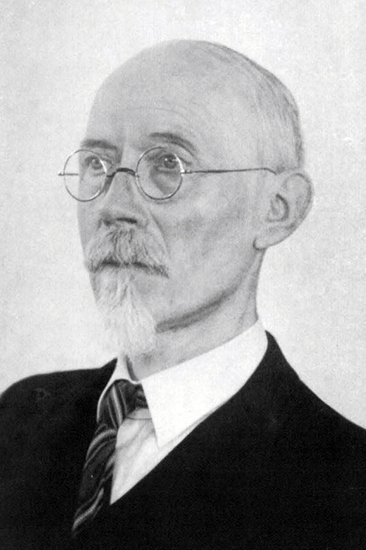
Variant Names
N/ABIO
Dissertation: N/AHighest degree: N/A
Fields of interest:
Biography:
Pannekoek was the son of Johannes Pannekoek and Wilhelmina Dorothea Beins, members of the rural middle class. He studied astronomy at the University of Leiden, where he became an observer at the Astronomical Observatory in 1898. He took his doctorate in 1902 on a dissertation on the variable star Algol. The following year, he married Johanna Maria Nassau Noordewier. The program of meridian measurements instituted by Frederik Kaiser two decades earlier was too confining for Pannekoek, who considered these measurement of little scientific use. A devoted socialist, he had become a member of the SDAP (Social Democratic Worker's Party) in 1902, and in 1905 he left the observatory to accept a position at the Socialist party school in Berlin and later Bremen. He was an active contributor, and later editor, of De Nieuwe Tijd and emerged as an important theoretician of the left wing of the German SPD. In Germany, he regularly contributed theoretical articles to both Die Neue Zeit and Bremer Bürger-zeitung.
The First World War forced Pannekoek to return to the Netherlands, where he became teacher at secondary schools in several places. He also continued his political activities, adopting a revolutionary international position, contributing a number of articles to Lichtstrahlen and Arbeiterspolitik, important leftwing journals. His political activities caused the Minister of Education to hold up and eventually, after the communist revolution in Hungary, to reject his appointment as vice-director of the Leiden Observatory. Pannekoek remained one of the most important theoreticians of international Socialist, and the Communist, movement. He is best known for his insistence on the autonomous action of the workers who after the revolution must organize themselves into independent, self-governing Worker's Councils.
If the Minister of Education could veto an appointment at the (national) University of Leiden, he did not have that power at the (municipal) University of Amsterdam, where Pannekoek had already been appointed lecturer of Mathematics and Astronomy in 1918. Seven years later he became professor. Pannekoek founded the Astronomical Institute of the University of Amsterdam, and his longer monographs on astronomical subjects appeared in its publications between 1924 and 1949. He was dismissed by the German government of the Netherlands in 1941.
At Amsterdam, Pannekoek became one of the founders of astrophysics in the Netherlands. He investigated the structure of the Milky Way through detailed photometric investigations, publishing his results on the northern hemisphere in 1924-29, and on the southern hemisphere in 1949. He also did important work on the atmospheres of stars: the abundance of hydrogen in stellar atmospheres, the quantitative analysis of the flash spectrum during a solar eclipse, and the low mass of giant stars. From early in his career, Pannekoek was interested in the history of astronomy. His Wonderbouw der wereld (The Wonderful Construction of the Universe) introduced the reader to astronomy through its history, De groei van ons wereldbeeld (The Growth of Our World Picture), published in English as A History of Astronomy, was considered the most reliable general history of astronomy for three decades. With his wife, Pannekoek was active in literary and musical circles in Amsterdam. He was a member of the Royal Netherlands Academy of Arts and Sciences since 1925 and received an honorary doctorate from Harvard University and the Gold Medal of the Royal Astronomical Society.
Residence
- Wageningen
- Leiden
Occupation
N/AEducation
N/AMembership
- Koninklijke Nederlandsche Akademie van Wetenschappen
Member Afd. Natuurkunde 19-05-1925 - Nederlands Natuur- en Geneeskundig Congres
Member [..1890]
Provenance
- Pannekoek, A., Verslagen Natuurkunde 69, 1960, p. 65-66 door C.J. Gorter; Jaarboek 1959/60, p. 328-330 door H. Zanstra.
- Biografie opgenomen in History of Science and Scholarship in the Netherlands
- Ledenlijst Vereeniging het Nederl. Natuur- en Geneesk. Congres (1890).
Publications
-
Researches into the structure of the galaxy Year: . Pages: 21. (PDF format)
-
Investigation of a galactic cloud in Aquila Year: . Pages: 16. (PDF format)
-
A photographical method of research into the structure of the galaxy Year: . Pages: 7. (PDF format)
-
Further Remarks on the Dark Nebulae in Taurus Year: . Pages: 4. (PDF format)
-
The Origin of the Saros Year: . Pages: 14. (PDF format)
-
Calculation of Dates in the Babylonian Tables of Planets Year: . Pages: 21. (PDF format)
-
The luminosity of stars of different types of spectrum Year: . Pages: 16. (PDF format)
-
The relation between the spectra and the colours of the stars Year: . Pages: 12. (PDF format)
-
Untersuchungen über den Lichtwechsel von β Lyrae Year: . Pages: 41. (PDF format)
-
The variability of the Pole-star Year: . Pages: 9. (PDF format)